Know what changed. Understand what is at stake.
Our decision-grade AI stack binds operational signals to probability, exposure and financial impact, so the decision is taken before the consequence reaches the P&L, not explained after it.
The missing decision layer
Data becomes useful when it changes a decision.
Fragmented systems hide emerging risks. Reports describe what happened. Operational changes become actionable only when a team understands their financial significance.
TheraOS brings the information together. AIT Agents translate changing conditions into scenarios, probabilities and recommended responses.
What it does
Anticipate. Track. Predict. Simulate. Prescribe.
One connected decision stack
TheraOS + AIT Agents.
Ingest, translate, act: from fragmented data to anticipatory alerts, prediction, scenarios and a controlled response.
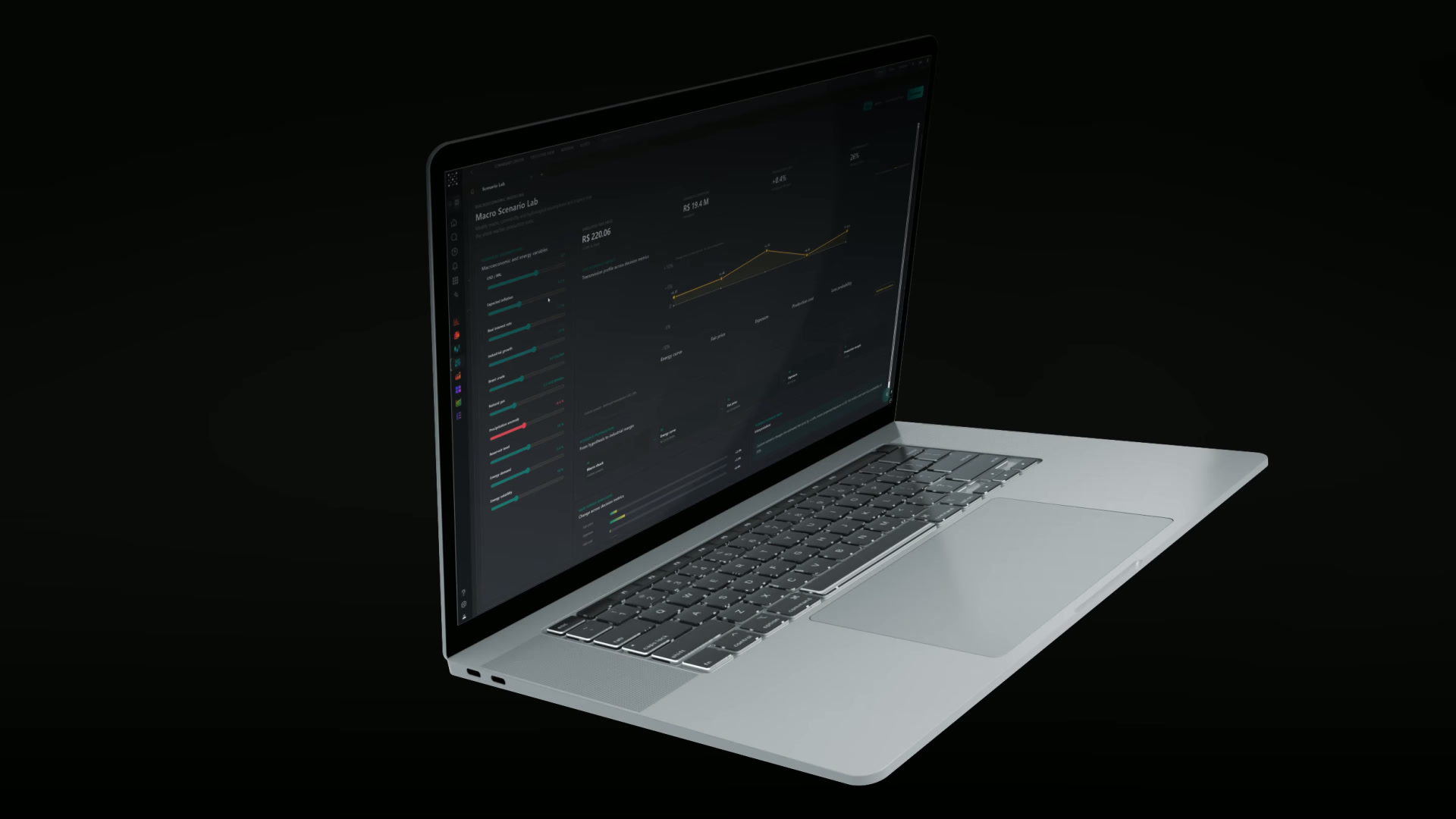
TheraOS in use
From the data to the decision, in the product.
Propagation
Exposure travels through paths no single report observes.
Executive decisions
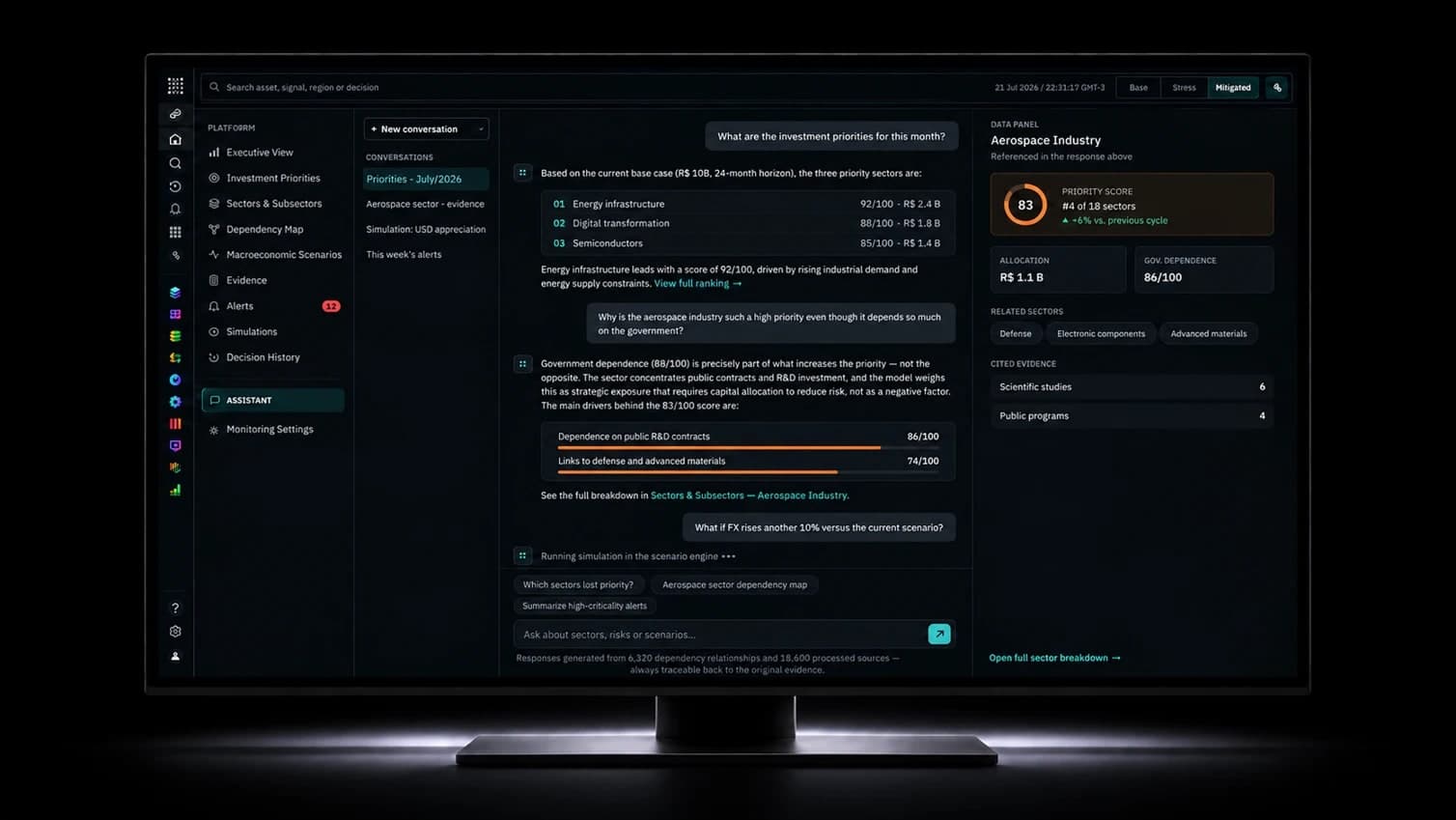
Ask what happens next.
TheraOS Advisor explores questions with simulation and evidence. Executive Assessment turns the same insights into reports for executive and board review.
01 / 08
Ask in natural language
“What are the investment priorities for this month?” The question is asked the way you would ask an analyst.
TheraOS product interface · demonstration environment.
Research foundation
The longer-term vision.
Computational epistemology examines whether a decision-relevant pattern persists when time windows, samples and assumptions change, and connects qualified evidence to calibrated probability and financial consequence.
This is an active research framework. Grand Thera's longer-term vision is to simulate chains of consequences before capital is committed.